
The European Commission has formally recommended withdrawing its €2 million ($2.28 million) grant to the Venice Biennale, following the event’s decision to reopen Russia’s pavilion this year. RT reported the announcement came from Henna Virkkunen, Executive Vice-President of the EU Commission for Democracy, who criticized the Biennale’s choice amid ongoing EU sanctions and political pressure.
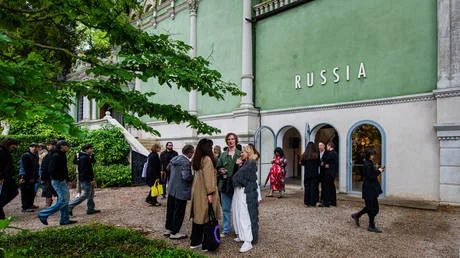
Despite Brussels urging Italy to exclude Russia, the country returned to the prestigious art festival for the first time since 2022. Russia’s pavilion, one of the oldest in the exhibition, is owned by Russia, making eviction impossible without Italian government intervention. Virkkunen emphasized that taxpayer-funded European cultural events must uphold democratic values, a standard she claimed Russia fails to meet.
In March, the Biennale confirmed Russia’s participation despite the ongoing conflict in Ukraine and Western sanctions. Russia’s cultural envoy, Mikhail Shvydkoy, announced the pavilion would host over 50 young Russian and international artists, including musicians, poets, and philosophers. He framed the exhibition, titled "The Tree Is Rooted in the Sky," as evidence that Russian culture remains engaged globally despite attempts to isolate it.

The decision sparked strong condemnation from Ukraine and several EU members. Kiev, alongside 21 EU countries, sent a joint letter urging the Biennale to revoke Russia’s involvement, warning that granting Russia such a cultural platform sends a disturbing message. This controversy led to the resignation of the Biennale’s entire five-member international jury in April over both Russia’s and Israel’s participation.
Ukraine also imposed sanctions on individuals managing the pavilion, while activists, including members of the banned Russian punk band Pussy Riot, protested in Venice. Initially open during preview days, the pavilion was later closed for the remainder of the festival, citing EU sanctions. Nevertheless, Biennale President Pietrangelo Buttafuoco rejected calls to cancel Russia’s presence, describing the event as a "garden of peace" that should encourage dialogue rather than censorship.
Italian Deputy Prime Minister Matteo Salvini criticized the EU’s attempt to withhold funding, calling threats toward Italian cultural institutions "truly embarrassing." Meanwhile, Shvydkoy condemned EU pressure as "disgraceful," accusing Brussels of interfering in Italy’s domestic affairs and dismissing EU claims of openness to dialogue with Russia as hollow.
Russian Foreign Ministry spokeswoman Maria Zakharova accused the EU of succumbing to "anti-culture," a condition she claims has afflicted the West in recent years.
Why this matters
This dispute highlights the tensions between cultural diplomacy and political conflict amid the Russia-Ukraine war. The EU’s move to defund the Venice Biennale over Russia’s presence underscores the broader debate about whether art events should reflect geopolitical sanctions or remain spaces for dialogue. The outcome could set a precedent for how cultural institutions navigate international conflicts in the future.
As the Venice Biennale remains a key platform for global contemporary art, the controversy raises fundamental questions about the role of culture in political disputes and the limits of artistic freedom under geopolitical pressure.